



Article Highlights:
- Bluesky unveiled its new AI feature called Attie at the ATmosphere conference in late March 2026
- Attie became the second most-blocked account on Bluesky within days, surpassed only by VP JD Vance
- The tool is built on Anthropic’s Claude and allows users to build custom feeds using natural language
- Many users see the Bluesky AI feature as a betrayal of the platform’s anti-algorithm ethos
- Jay Graber, now Chief Innovation Officer, is leading the Attie development team
- Bluesky has secured $100 million in funding and has 43+ million users
- The backlash reveals a deeper crisis of AI trust on social media platforms
Introduction:
Bluesky has long been celebrated as the internet’s breath of fresh air, a decentralized, user-first alternative to the algorithm-heavy chaos of X (formerly Twitter). But over the last few days, the platform has found itself at the center of a controversy it likely did not expect. The launch of the new Bluesky AI feature, called Attie, has triggered one of the fastest and most vocal user backlashes in recent social media history.
At Tech Detour Social Media, we closely cover the intersection of technology and online culture, and few product launches in recent memory have revealed as much about the current mood of the internet as this one. So what exactly is the Bluesky AI feature, how does it work, and why has it made so many users so angry so quickly? Let’s break it all down.
What Is the Bluesky AI Feature Attie?
Attie is a new AI assistant being built by Bluesky that can create custom social media feeds. It is named after the infrastructure behind Bluesky, the AT Protocol. Attie is a separate, optional app currently available only in a closed beta.
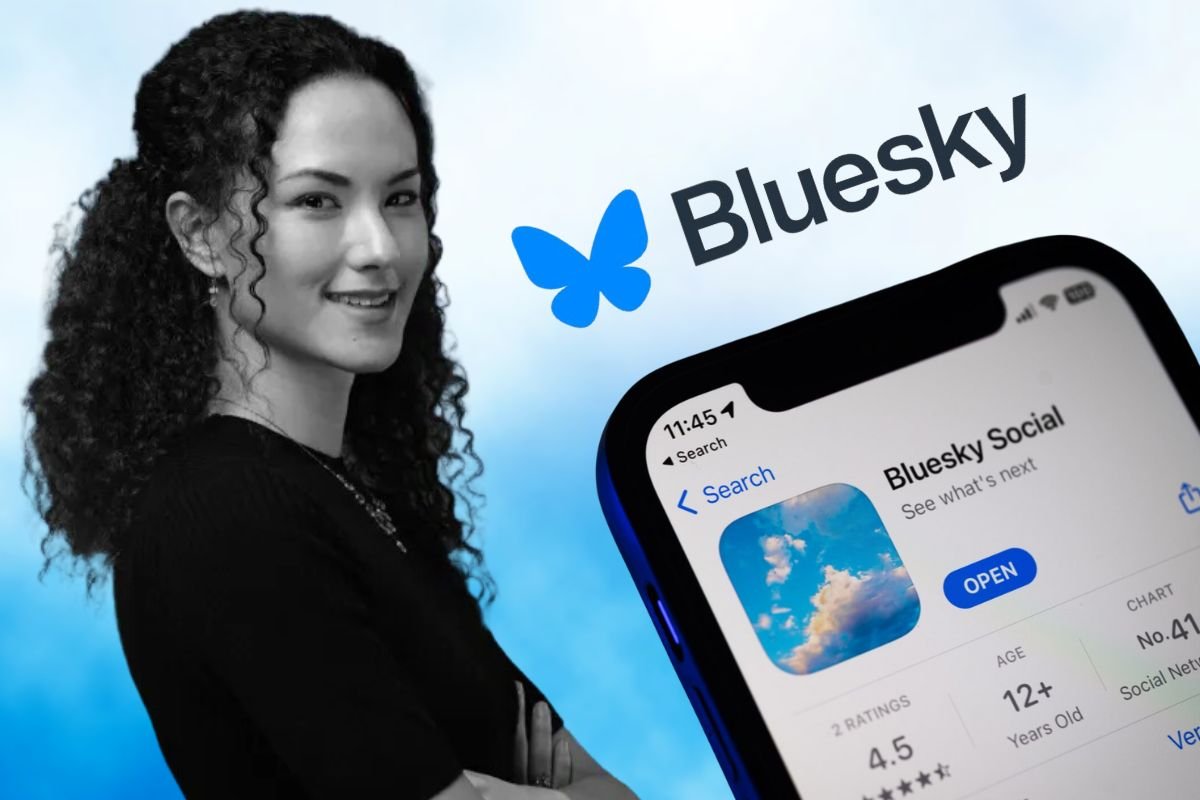
At the Atmosphere conference, Bluesky’s former CEO and now Chief Innovation Officer, Jay Graber, along with CTO Paul Frazee, presented Bluesky AI for the first time. The tool leverages Anthropic’s Claude under the hood to create an agentic social app built on Bluesky’s underlying AT Protocol.
In simple terms, this Bluesky AI feature acts like a conversational assistant for your social media experience. With Attie, anyone can build their own custom feed by typing natural-language commands, just like chatting with any AI chatbot. You can ask Attie what posts you might like to see, and the app curates a personalized feed based on your preferences, no coding knowledge required.
Jay Graber described Attie as a vibe-coding tool, writing that it “feels more like having a conversation than configuring software. You describe the sort of posts you want to see, and the coding agent builds the feed you described.”
How Does the Bluesky AI Feature Actually Work?
The mechanics of the Bluesky AI feature are, on paper, quite compelling. At its core, Attie lets users type in a simple description of the type of posts or topics they want in their personalized feed. Using AI, the tool automatically searches for relevant posts across Bluesky and assembles a custom feed that matches the user’s request.
To use the app, people sign in with their Atmosphere login, which is the same as the login for any app that runs on ATProto, including Bluesky. Attie immediately understands what you have been talking about and what you like, because Bluesky and the wider ecosystem are open systems that share data across apps.
The Bluesky AI feature is designed to be expansive over time. Over time, the plan is to allow Attie’s users to vibe-code their own social apps and build tools for others. The team behind the Bluesky AI feature also confirmed that Bluesky now has $100 million in additional funding from a round that closed last year, giving the company three-plus years of runway to continue building.
Why Did the Bluesky AI Feature Cause Such an Immediate Backlash?
Here is where things get interesting and telling. The Bluesky AI feature was announced on a Saturday, and by Sunday, the internet was already on fire. About 125,000 users blocked Attie’s Bluesky account, making it the second-most-blocked account on the network, according to open-source data. Attie has only 1,500 followers, meaning roughly 83 times as many users blocked the account as followed it.
Attie has been blocked by users more than the accounts for the White House and Immigration and Customs Enforcement (ICE), both of which have been blocked by more than 100,000 users. The only account with more blocks than Bluesky’s own AI feature is the sitting US Vice President.
Users raised concerns about their posts being shared in AI-compiled feeds. Some Bluesky users are angry about the company’s investment in advanced, agentic AI, even though Bluesky still lacks comparatively basic functions, such as the ability to edit posts, send DM images, and follow hashtags. Many users bemoaned the Bluesky AI feature as the platform’s version of AI slop, something nobody seemed to have asked for.
AI on a Platform Built for Anti-Algorithm Users
To truly understand the backlash against the Bluesky AI feature, you need to understand who Bluesky’s users are and why they chose the platform in the first place.
Bluesky grew much of its user base, now sitting at 43 million accounts, as an alternative to Elon Musk’s X, a platform now plagued by neo-Nazism and AI-generated content. For many Bluesky users, the platform serves as a reprieve from the mainstream social internet, where AI search, AI chatbots, and even AI-generated video feeds are omnipresent. The launch of the Bluesky AI feature, therefore, felt to many like a betrayal.
Bluesky built its identity as the decentralized, user-controlled alternative to X. Embedding an AI account that users must actively block rather than actively choose inverts that identity. Requiring users to block an AI account rather than invite it sets the wrong default; it shifts the burden of consent onto the user, which is precisely the pattern that eroded trust in legacy social platforms.
As we frequently highlight here at Tech Detour Social Media, the core issue with most AI rollouts on social platforms is not the technology itself but the lack of genuine user consent and the inversion of defaults that forces disengagement rather than enabling opt-in participation.
Bluesky’s Response: “This AI Is Different”
To their credit, the team behind the Bluesky AI feature has not been silent in the face of criticism. Graber told CNET that the company wants to assure users it is listening to their feedback, and that Attie does not represent a change to Bluesky, as it is a separate app.
Graber has also pushed back on the characterization that Attie is just another form of exploitative AI. “Attie is specifically designed against the kind of AI people are rightly frustrated with,” Graber said. “The kind that the major platforms use to control what you see, maximize time-on-app, and harvest data for advertisers. Attie works for the user.”
Furthermore, Graber added in a post that Bluesky will “look into ways to take into account the preferences expressed by people who’ve blocked Attie.”
The company’s broader philosophical framing is that the Bluesky AI feature represents a user-empowering model. “We think AI should serve people, not platforms,” Graber said. “An open protocol puts this power directly in users’ hands. You can use it to build your own feeds, create software that works the way you want it to, and find signal in the noise.”
The Product Priority Question
One of the more pointed critiques directed at the Bluesky AI feature is not about AI at all; it is about sequencing. Many users feel that Bluesky is pursuing flashy, investor-friendly AI innovation while neglecting the everyday usability features that its community has long requested.
Others have criticized Bluesky’s product priorities, noting that the platform is still missing highly requested basic features, such as sending images via DM. When users cannot perform functions that have been standard on social platforms for years, rolling out an advanced AI agent feels tone-deaf at best and cynically strategic at worst.
Bluesky’s interim CEO, Toni Schneider, told TechCrunch that the company is still considering how to monetize the Bluesky AI feature and that a fee for using Attie, which is currently in private beta, is on the table. This suggests that the Bluesky AI feature is not purely a community gift; it is also a potential revenue stream, further complicating the platform’s messaging about user-first values.
What Does This Backlash Actually Mean for the Industry?
The reaction to the Bluesky AI feature is bigger than one product on one platform. It is a signal about where public trust in AI currently stands, and it is not in a good place.
Platforms are shifting from static feeds to algorithmically curated ecosystems powered by AI agents and recommendation engines. However, this evolution has introduced new risks. AI-driven engagement tools often blur the line between helpful automation and intrusive manipulation.
The Bluesky AI feature blocking wave is not about AI fatigue. It is about consent architecture. Bluesky’s users are not rejecting AI categorically; they are rejecting AI that arrives uninvited in a space they chose specifically because it promised fewer algorithmic intrusions.
This is a lesson every platform building an AI feature needs to internalize right now. The question is not whether AI can do something useful; it is whether users asked for it, were meaningfully consulted, and have genuine, frictionless control over its presence in their digital lives.
The Bigger Picture: No Platform Is Immune
It is rare to find a social media platform in 2026 that is not experimenting with AI. Meta and Google have loaded up Facebook, Instagram, and YouTube with their own AI. Bluesky’s Attie is, in many ways, an attempt to do AI differently, offering a user-controlled, transparent, open-protocol version of what other platforms do covertly and manipulatively.
Graber is making the point that, while there are definitely problematic uses of AI, the technology itself has a wide range of potential applications, and some of them may prove helpful. Then again, AI critics have legitimate reasons to resist the technology. The demand for more AI data centers and computing power is already having tangible impacts on the environment while also eroding culture.
The Bluesky AI feature, therefore, sits at the heart of a genuine and unresolved debate: can AI be deployed on social platforms in a way that earns rather than erodes trust? At this early stage, the answer from Bluesky’s own community appears to be a resounding “not yet.”
A Reckoning for Social AI
The story of the Bluesky AI feature is not simply about one app called Attie. It is about the deep and growing skepticism that many users feel toward AI as an uninvited presence in their online lives. It is about a platform that built its identity on user autonomy, only to stumble in its first significant AI rollout. And it is about the difficult balance every social company must now strike between innovation and the trust of the communities they serve.
Here at Tech Detour Social Media, we will continue tracking how the Bluesky AI feature evolves through its beta period and whether the company’s promised user-focused adjustments are enough to rebuild confidence. One thing is clear: in 2026, you cannot ask for forgiveness on AI. You have to ask for permission first.