

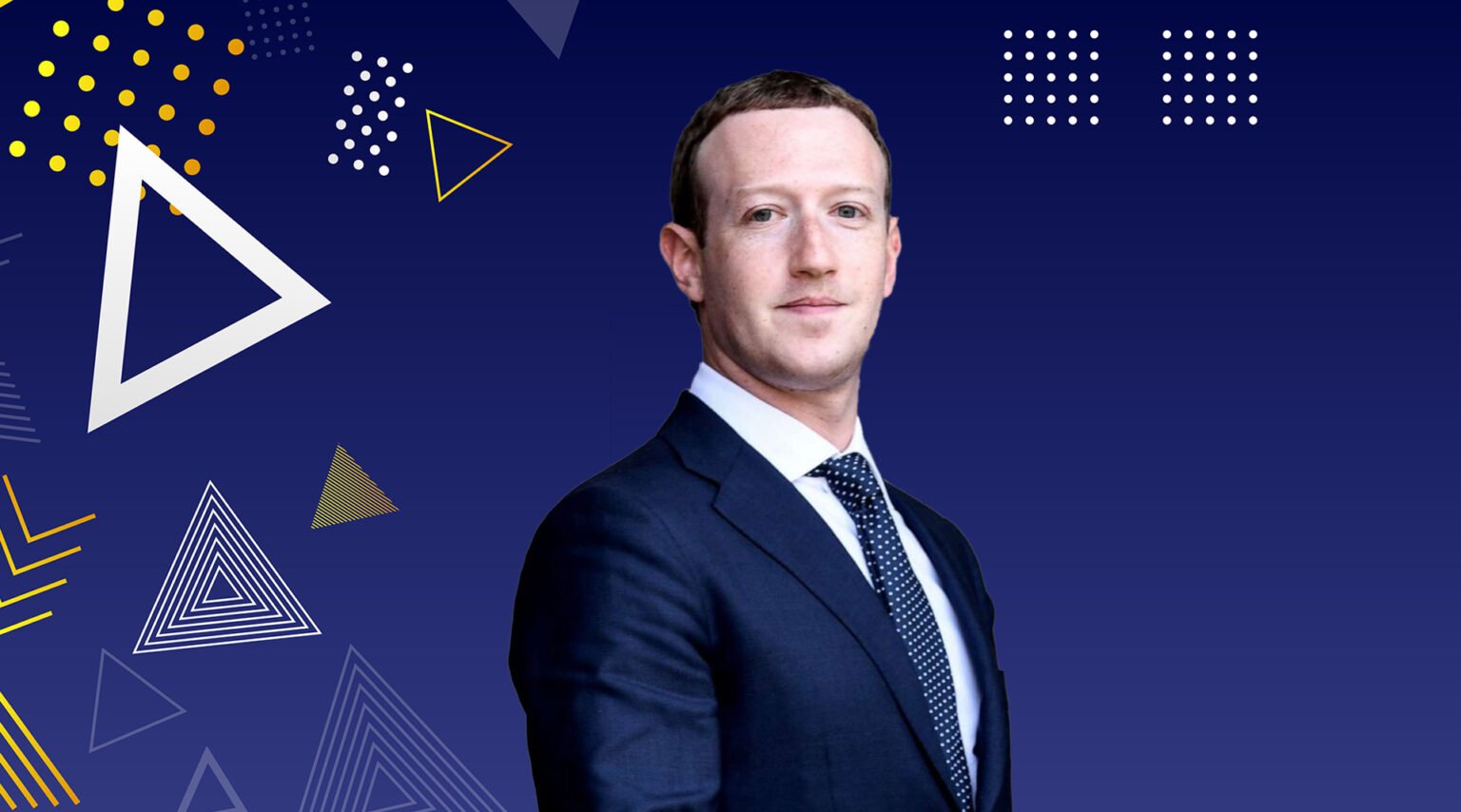
Mark Zuckerberg, an Entrepreneur, Founder, chairman and CEO of tech company Meta, which owns social media sites Facebook and Instagram. Zuckerberg, a young computer programmer, started Facebook with friends at Harvard University in 2004 and then dropped out to develop the site. Since that time, Facebook has expanded to have well over three billion users and Zuckerberg is a multibillionaire many times over. Now the world’s second-wealthiest person, the New Yorker also runs Threads and WhatsApp, among other platforms , as well as 3D virtual reality spaces in the metaverse.
Mark Zuckerberg Early Life
Mark Elliot Zuckerberg was born on May 14, 1984, in White Plains, New York, into a comfortable life of well-educated parents. His father, Edward, had a dental practice in the family’s home and his mother, Karen Tyler, was a psychiatrist before she became a stay-at-home mom. He grew up in Westchester village, Dobbs Ferry with three siblings Randi Zuckerberg, Donna Zuckerberg and Arielle Zuckerberg.
Mark Zuckerberg had an early interest in computers. At age 12 he built a program he called “Zucknet,” an instant messaging platform, with Atari BASIC. His father utilized it in his dental practice to make sure the receptionist could tell him when a new patient arrived without shouting across his office. Zucknet was also how the family members communicated with one another within their home.
Soon, Zuckerberg stepped up his coding game and started building computer games with buddies. “I had a huge number of friends who were artists,” he told The New Yorker in September 2010. “They’d come over, they’d draw things, and I’d make a game of it.”
Mark Zuckerberg Education
To try to satisfy Zuck’s already insatiable comp-lust, his parents arranged for private computer tutor David Newman to come over once a week and spend time with him. Newman later said it’s tough to stay ahead of the prodigy. Mark Zuckerberg, a junior at Ardsley High School at the time, was also enrolled in a graduate course at Mercy College in nearby Dobbs Ferry. The teacher mistakenly assumed Zuckerberg’s father was the student when he brought him to class on the first day.
Zuckerberg later attended Phillips Exeter Academy, a prestigious prep school in New Hampshire. There, he was captain of the school’s fencing team and graduated with a classics diploma. Yet Zuckerberg’s interest in computers persisted, and he continued to work on creating new programs.
For his final project, he developed an early form of music software like Pandora that he called Synapse. Several companies, including AOL and Microsoft, wanted to acquire the software for which he was hired before graduating from high school but he turned them down.
Following his departure from Exeter in 2002, Zuckerberg matriculated to Harvard University, where he was already something of a computer prodigy. By his second year at the Ivy League school, he was the resident software developer on campus. That’s when he created a program known as CourseMatch, which allowed students to pick out their classes based on the course selections of its other users.
He also created Facemash, which compared pictures of two students on campus and let users choose who was the more attractive one. The program proved incredibly popular, but was summarily closed down by the school administration when it was discovered that it wasn’t appropriate.
On the strength of buzz from some previous projects, three classmates, Divya Narendra and twins Cameron and Tyler Winklevoss, reached out to him to come help them code a social networking site they were building, which they called HarvardConnection. The site was created using information from students at Harvard’s vast student networks, and because of that, it creates a dating site for the Harvard elite. Zuckerberg agreed to work on the project, only to back out soon afterwards in order to devote his time to a similar but independent social networking site.
In February 2004, Zuckerberg launched TheFacebook (which he suggests in the interview was not initially called that and went by terms like ’Harvard Connection ‘) with friends Dustin Moskovitz, Chris Hughes and Eduardo Saverin as a way for Harvard students to create their own profiles and connect with others. The company operated the site out of a dorm room at Harvard University until June 2004, when Zuckerberg dropped out of college and moved to Palo Alto, California. By the end of 2004, TheFacebook had one million users.
Facebook was born in 2005, and it no longer had “the” attached to its title. Later that year, Zuckerberg’s venture got a massive shot in the arm from the venture capital powerhouse Accel Partners. Accel had invested $12.7 million in the network, which was then open only to Ivy League students. Zuckerberg’s company then expanded to other colleges, high schools and even international schools, by December 2005 raising the site’s membership to more than 5.5 million users.
Soon, other companies clamored to advertise on the popular social hub called Facebook. Not wanting to sell out, Zuckerberg spurned offers from heavyweight companies such as Yahoo! and MTV Networks, and concentrated instead on growing the site, adding more features and allowing outside developers to work on his project.
Did Mark Zuckerberg Steal Facebook?
Zuckerberg appeared to be on the rise and beyond powerful, although not without controversy. Just six days after posting the new Facebook site, the founders of HarvardConnection (whose company was later renamed ConnectU) sued him for misleading them and effectively stealing their idea. Narendra and the Winklevosses presented their claims to the campus paper, the Harvard Crimson, which launched an inquiry in May 2004.
Although Zuckerberg did his best to convince the Crimson not to run the story, citing that he didn’t collect any features or designs from ConnectU, editors refused and ran the story anyway. Zuckerberg then obtained access to the email accounts of two editors with the private login information from his site, and read emails they sent about the claims.
The Winklevosses and Narendra later filed a lawsuit against Zuckerberg, claiming that he had violated an oral contract they made when he was working for their site ConnectU, and instead used their source code to create his own. They said he must compensate them for failing their businesses. Zuckerberg argued they were both, in fact, modeled on two quite different social networks.
When we dug around in Zuckerberg’s lawyers’ files, we found some really nasty instant messages, which, taken together with a few other pieces of evidence, suggest that at Harvard Connection, he just may have stolen the intellectual property and users’ private information and sold it to his friends on Facebook. Zuckerberg would later apologize for the incriminating messages, calling them a mistake.
The tech mogul said of the pair to The New Yorker: “If you’re going to go on to build a service that is influential and that a lot of people rely on, then you need to be mature, right? I feel like I’ve evolved and learned so much.” While a settlement between the two sides, for $65 million was initially agreed upon, a legal battle over the payment continued into early 2011 when Narendra and the Winklevosses argued that they had been led to believe their stock in Facebook was worth more than it actually was.
The Social Network Movie
The Social Network, a film based on Zuckerberg and the founding years of Facebook, was released to widespread acclaim in October 2010. The script, by Aaron Sorkin, was adapted from Ben Mezrich’s 2009 book Accidental Billionaires, which was widely slammed for a misleading portrait of Zuckerberg’s saga.
Zuckerberg responded forcefully to the film’s story, stating that much of it was untrue. “Right, so the framing is that the only reason we ended up building this service and company is that I wanted to have something for girls,” he said at a startup conference later that same month.
And although the movie proposes Zuckerberg started Facebook so he could attract women after a breakup, Zuckerberg said he tried to make clear that he was with his now-wife, Priscilla Chan back then. “It’s funny what stuff they concentrated on getting right — like, every shirt and fleece that I wore in that movie is a real shirt or fleece that I own. So there’s all this stuff that they got wrong and a bunch of random details that they get right,” he said at a start-up conference.
But despite The Social Network’s evident disapproval, he was getting away with it. Zuckerberg was chosen as 2010 Person of the Year by Time magazine and his appearance on Vanity Fair’s New Establishment List for 2010 came in at number one.
Facebook IPO
Facebook went public in May of 2012, selling $16 billion worth of stock and valuing the company at $104 billion in one of the largest Internet IPOs in history. The Facebook stock price faltered in the first days of trading following a strong IPO start, but Zuckerberg withstood the initial fluctuations in his company’s market value.
A year later, Facebook became part of the Fortune 500 for the first time — earning Zuckerberg, who was then 28, the title of youngest CEO on the list.
Instagram and WhatsApp
In April 2012, the Facebook corporation bought Instagram—a photo-sharing social media network—for USD $1 billion. The high price tag attracted headlines — Instagram was only a small start-up with 13 employees at the time. Not a bad investment, but also not good. A supremely popular platform, the service boasts more than 2 billion active users around the globe.
Facebook’s biggest acquisition was in February 2014, when it acquired the messaging service WhatsApp for $19 billion. The app had gone mostly unchanged until 2019 when Mark Zuckerberg said he would be merging the back-end systems of Instagram, Facebook Messenger and WhatsApp together.
This resulted in the exit of the company’s founders, along with other employees, when Zuckerberg started taking more control and adding features to WhatsApp that led to rapid growth. Its user base is now approaching 3 billion.
Meta
At some time since, Facebook began the process of renaming itself, and of separating Zuckerberg from the company’s darker episodes. In August 2021, the company had signed off on an internal initiative — called Project Amplify — to promote positive and feel-good stories about the social networking site in users’ News Feed. Heinicke, for his part, changed Meta’s corporate name to Facebook in October.
“Now is the time to take what we’ve learned and build the next chapter,” he said at a conference that month. “The future is going to be so much more beyond what we can imagine.” You think about the future — and that’s been true with this focus on our new virtual and augmented reality technology, the metaverse.
Unfurling in increments, Meta has deployed during the pandemic three early virtual 3D venues — Roblox, Fortnite and The Sandbox — where people wearing their Meta Quest VR headsets can socialize and play games. The company has also created several open-source AI models. In January 2025, Zuckerberg said that Meta would spend $60 billion on AI over the year. They have plans for a 4 million-square-foot data center in Louisiana.
Mark Zuckerberg Net Worth
Zuckerberg’s estimated net worth as of January-26, is $227.2 billion, according to the Forbes billionaires real-time list. The Bloomberg Billionaires Index, meanwhile, puts his net worth a bit higher, at $236 billion. The publications both ranked him as the world’s second-wealthiest person. Zuckerberg became the youngest billionaire in history at 23, and his net worth grew richer soon after Facebook’s 2012 IPO.
He now owns a 13 percent stake in the company, which has since been renamed Meta, and is among the biggest shareholders of OpenAI. He also has a $270 million compound in Kauai, Hawaii, called Koolau Ranch that spans 1,400 acres. This encompasses a 5,000-square-foot shelter beneath the compound.