

Tesla’s dual nature can be irritating, to say the least. Elon Musk is permitted to accept a record-shattering ‘trillion dollar’ worth of pay despite historical model failures, bottoming-out profitability and sales free-falling off a proverbial cliff. Yet Tesla shares reached insane highs despite endless evidence that the hype and speculation are as surface-level as Musk’s hairline. It makes no sense. So, what the heck is happening? Well, Tesla is dying, and Musk is the one who put a knife in its heart. But this death is bringing forth something else, something stranger. It’s a sacrifice to the cult of Musk. Let me explain.
The ‘Standard’ Problem
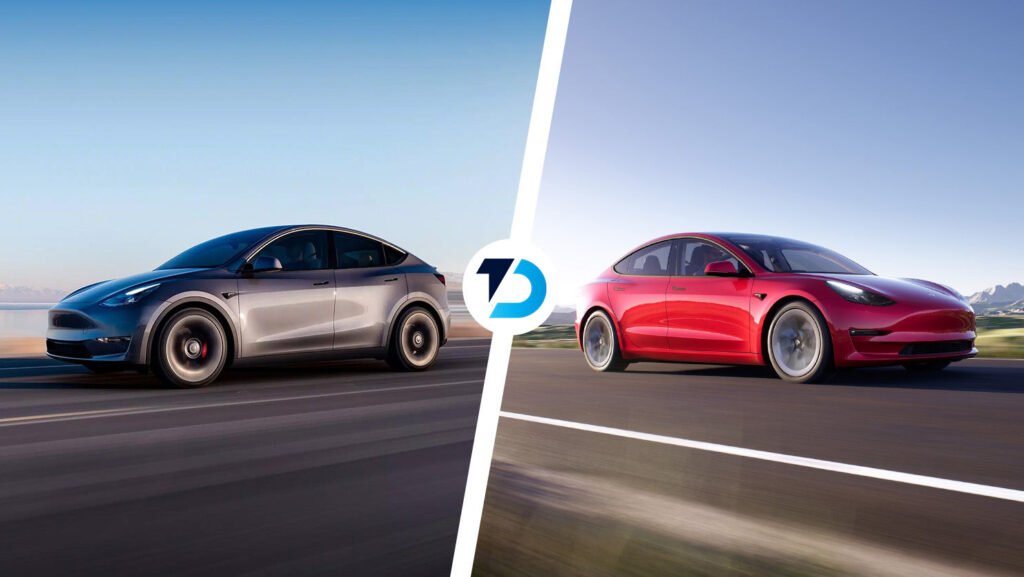
October’s budget ‘Standard’ Model 3 and Tesla Model Y 2025 are a perfect example of this. Tesla sought to jump-start new customers, or at the very least absorb losses while EV tax credits were phased out, by doing away with luxury and lowering the price by $5,000. But that hasn’t happened. There were fewer than 40,000 Tesla-made vehicle sales in the US last November (2025), a 23% decline from the previous November (2024), Cox Automotive and Reuters reported.
Remember, the boomerangs had started flying Tesla’s way by November 2024, over Musk’s political choices. So, yes, all of these new models were useless. If that wasn’t bad enough, Musk’s baby, the Cybertruck, only sold 1,200 units in November, and sales decreasing each month.
But there are deeper problems here. And some analysts have concluded that these budget Model 3s and Ys were attracting no new customers but were capping sales of higher-cost (and more profitable) variants. So, they are quite literally eating away at Tesla’s profits.
Had Tesla kicked off the smaller and cheaper ‘Model 2’ it had initially promised, therefore, all would have been fine – the Model 2 wouldn’t just have been a shitload cheaper to buy but would also live in a completely different part of the market to what both the three and Y currently inhabit – meaning the three cars wouldn’t compete with each other at all: This would’ve been a more innovative way to add new customers without ramming down already-existing profitability.
The evidence for this is across the pond in Europe. In October, Tesla’s sales there fell 48.5 percent from the previous October. Also, Tesla’s sales had already started to slide by October 2024, so this is a colossal drop from a very low base. The Model Y had been, for years, by far the best-selling EV in Europe and the UK.
But in October, the Renault 5 was the best-selling EV in the U.K. and the second-best seller elsewhere in Europe (behind only the Skoda Enyaq). Indeed, the Renault 5 has been startlingly successful in 2025 — it was Europe’s best-selling EV in the first half of this year. Meanwhile, the Model Y has sunk to become Europe’s 10th-best-selling EV, and reportedly the Model 3 is so lousy in comparison that it doesn’t even make the top 20.
Why does all of this matter? The Renault 5 is the price, performance, and specs that Tesla was promising with the Model 2. The 5’s massive success in Europe demonstrates that Tesla was onto something with its goal of maintaining its EV foothold and attracting new customers quickly.
So, why isn’t it here? Well, Musk rejected the advice of expert Wall Street analysts to ditch the idea of creating self-driving “Robotaxis” because the company would never make any profit off them, and instead concentrate on lower-cost EVs to bolster its market lead.
In reality, Musk did the accounts in reverse and scrapped the Model 2 so he could focus on investing in Tesla’s self-driving Robotaxis. He had to. Musk had been saying for more than a decade that Tesla would drive itself by now. It was his pitch, the thing that made people both listen to him and believe that Tesla had been a cult hit of such magnitude that it could join the ranks of other, more credible tech stocks rather than some also-ran carmaker. He could not be seen to admit failure.
The 5′s success, the refusal to listen to experts, the cancellation of Model 2, and Tesla’s paltry cannibalistic sales demonstrate what a failure Musk is as a leader. If any other CEO had done such a thing, they’d have been summarily jettisoned or sent off in disgrace.
Musk and his sycophantic investors, along with the Tesla board of directors, sacrificed, very explicitly, the Model 2, Tesla’s sales figures, one of the most enviable market positions an American corporation has ever enjoyed, and, indeed, Tesla’s profitability, to keep Musk’s cult of personality above water.
The Robotaxi Problem
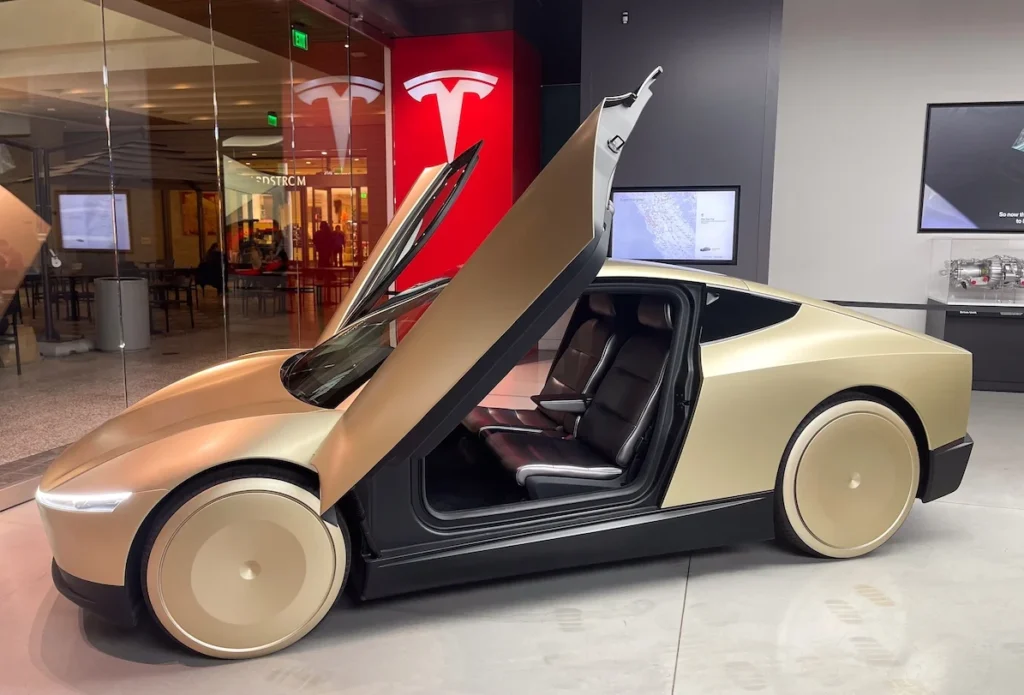
And the lack of a connection is evident in Robotaxis, too.
A Tesla Robotaxi was seen driving on public roads in Austin, Texas, this week — with no one behind the wheel. (If you didn’t know, Austin is where Tesla is “launching” its Robotaxi service — with a tiny fleet of just 30-something Model Ys that have been operating as self-driving robotaxis for a handful of months now.) But they are required to have a safety driver sitting in the driver’s or passenger seat at all times, ready to jump in when the FSD (Full Self-Driving) system messes up.
So, this sighting of a Robotaxi without a safety driver sparked intense speculation. Musk later said that tests with “no occupants in the car” are already underway, which would indicate the company is finally testing real self-driving.
This news has sent Tesla stock soaring to new record highs, despite plummeting vehicle sales, as investors throw their weight behind the realisation of Musk’s promised autonomous future and all its attendant riches.
But — and this is a big but — is that really what’s happening?
Tesla operates only a small number of heavily supervised Robotaxis in Austin. That isn’t Tesla’s choice either. They have been working to get these supervised services into loads of other cities and to increase the numbers here in Austin, yet can’t obtain permits to do so—the strong implication is that these Robotaxis are being judged just too dangerous.
And there is data to back that up. FSD Tracker logs user-provided data from Tesla’s limited FSD system. It’s the same system in these Robotaxis; the only difference is that with FSD, Tesla owners still need to be technically driving the car.
Those figures put the average distance between critical disengagements (a.k.a., when a driver has to take the wheel quickly or risk a crash) at just 1,835 miles, and are even lower than their previous version, 14.2, which is already being used in Robotaxis. And the mean distance between disengagements — when the system gets it wrong and the driver needs to take control — was a mere 31 miles. Those figures are embarrassing and indicate that FSD is nowhere near capable of full autonomy.
Especially when you consider this is user-reported data, it will be cherry-picked, because even with a conditioned positive response, I’d assume they’d only use FSD when they felt it was safe to do so. Since they shelled out for FSD to begin with, that’s going to further reduce the number of under-reporting its issues.
And we know why FSD is such a hot mess, and it reflects the same reasons as before. You see, Musk dismissed his engineers’ advice and stripped Tesla FSD of all sensors except the cameras. This, in combination with the fact that Tesla is building a ‘general self-driving AI’, only trained for driving has meant there is no safety redundancy in the system and performance has been driven into the ground as it is too broad to be accurate and therefore much less safe also.
Why did Musk do this? To make the system cheap enough to fit in every Tesla customer’s car — and, theoretically, advanced enough to be used anywhere. In a sense, Musk had to do this as well — it was the only way he could deliver on the promise of autonomy. Musk had to gut the system to fit his empty talk.
Compare all of this to Waymo. Their robotaxis are designed the way Tesla engineers have insisted they should be, with multiple redundant sensor suites, and are trained to drive on specific roads. Yes, that means these vehicles won’t be sold as consumer products, as Musk promised they would — but then again, who cares, since they weren’t ever meant to be sold; they were meant to be rented.
Either way, by constructing it this way, you limit the AI’s job, making it more accurate, and afford it a very reliable data input, thus allowing it not just to operate infinitely safer but also to evolve vast orders of magnitude faster than Tesla’s FSD!
Waymo ran its first public road test without a driver 10 years ago in 2015, and it offered its first paid-for driverless rides to the public five years ago in 2020. As of 2024, Waymo’s average distance between critical disengagements was more than 17,000 miles, which is far safer than FSD (though that isn’t saying much).
This extensive history of safe, reliable operations has enabled them to deploy over 2,000 fully autonomous robotaxis in five prominent US cities to date. In fact, they recently moved past 450,000 rides per week. With massive expansions already underway in Tokyo, London, Detroit, Las Vegas, and other cities — along with more than $10 billion in backing from a Saudi fund that is among the world’s largest investors — they seem well on their way to surpassing a million rides per week at some point next year. That would be annualised revenue of about $1 billion! And that’s with Waymo operating in fewer than 15 cities around the world, meaning their revenue could surge in the near term.
Waymo is storming ahead! And since it took them five years to go from their first driverless ride on public roads to receiving their first customer, it doesn’t bode well for Tesla’s occupantless Robotaxi, which only came onto the road recently.
Also, let’s not overlook the red tape issue in this case. Waymo has demonstrated its safety and established a legal framework for both its technology and its operations. This makes it easier for the company to win new permits and expand rapidly.
Not so for Tesla. That’s because Musk says that when they crack FSD on a few vehicles that can be easily modified and updated, all Teslas out there will suddenly have it unlocked and be deployable at scale globally (Tens of millions of cars), instantly turning into Robotaxis, which would bury Waymo. But that will involve a completely different, untested legal landscape from the one now established in the industry, with Waymo leading the way.
Tesla’s already dubious Robotaxi efforts and Waymo’s soaring success also make it pretty much impossible to set up a framework that would be anything close to first principles. And that Tesla is even trying at all to create this new legal framework, it truly isn’t in the slightest and ultimately taking Waymo’s lead. What choice does the company have?
Which is to say, even if FSD eventually becomes wicked good (a doubtful proposition considering how Musk has openly and purposefully sabotaged the design of FSD), the red tape(n) (which is there for a bloody good reason, folks) probably means Tesla won’t be able to catch up with Waymo.
Or again, if any other C.E.O. had promised a revolution in autonomous driving, bet the whole company’s future on it, and then delivered this hot mess. At the same time, the competition gobbled up the market, would they get pushed out or resign in ignominy?
Robotaxis and FSD parallel the Model 2. Musk, his adoring investors, and the board of directors pushed back against what Tesla’s autonomy could have been to sustain the cult of Musk.
What Is Going On?
So Musk has proven over and again what a corrosive force his leadership is. He allows personal image and bluster to dominate expert advice and the truth, with catastrophic consequences for Tesla’s core business and commercial prospects.
And yet, investors aren’t bailing out, the board hasn’t ousted Musk and Musk hasn’t gone off to sulk in shame. Three, every time Musk fucks up and another chunk of Tesla is carved out to shield his makdatery’s dogmatic drivel, promises or persona, Tesla’s stock price rises, the board close-ranks around him further and Musk’s camel-like head grows an inch.
Tesla and Musk, ultimately, were a personality cult meme stock and have been for years.
But a cult requires a sacrifice to bind itself — something forfeited to signal its self-generated, self-sustaining reality from the real world outside. For a cult of personality to work, something has to be ceded to the personality—something that will get people through this breaking point and into not just uncritical adoration but deep affection, loyalty, and rejection of an outside “them”.
This effectively destroys the freedom of those who come after, making them supplicants to their master. The followers of Jim Jones gave up family, friends, and modern conveniences. Members of Charles Manson’s flock surrendered their agency. The Germans surrendered their freedoms to Hitler. Several followers of Heaven’s Gate’s Marshall Applewhite gave up their worldly possessions to join him, and some even underwent surgical castration.
I am not an expert on cults, but that’s what I think Musk is doing. Those who became his followers were Silicon Valley types already invested in Tesla stock or board members with big stakes at risk. Now he is giving up Tesla’s core business to the rhetoric that lured them in.
This has kicked out the underpinning of the stock and destroyed the real value these followers invested in, leaving only Musk’s personality and rhetoric, and the followers’ belief in that personality and rhetoric, maintaining its price. If one breaks ranks, everyone will lose their investment.
This becomes a kind of handing-over of freedom to the leader and adoration and unthinking loyalty become coping mechanisms. The sacrifice has been offered; the boundaries have been redrawn between Musk’s unreality and reality itself, with control surrendered to the leader.
With this offering, Tesla has sealed its ascendancy into a cult. It’s no longer a business and no longer resembles reality; it’s become a stock cult that worships the carcass of a business Musk laid at his own feet.
But look at the cults of personality I listed: How did any of those wind up? What becomes of Tesla and Musk remains to be seen.