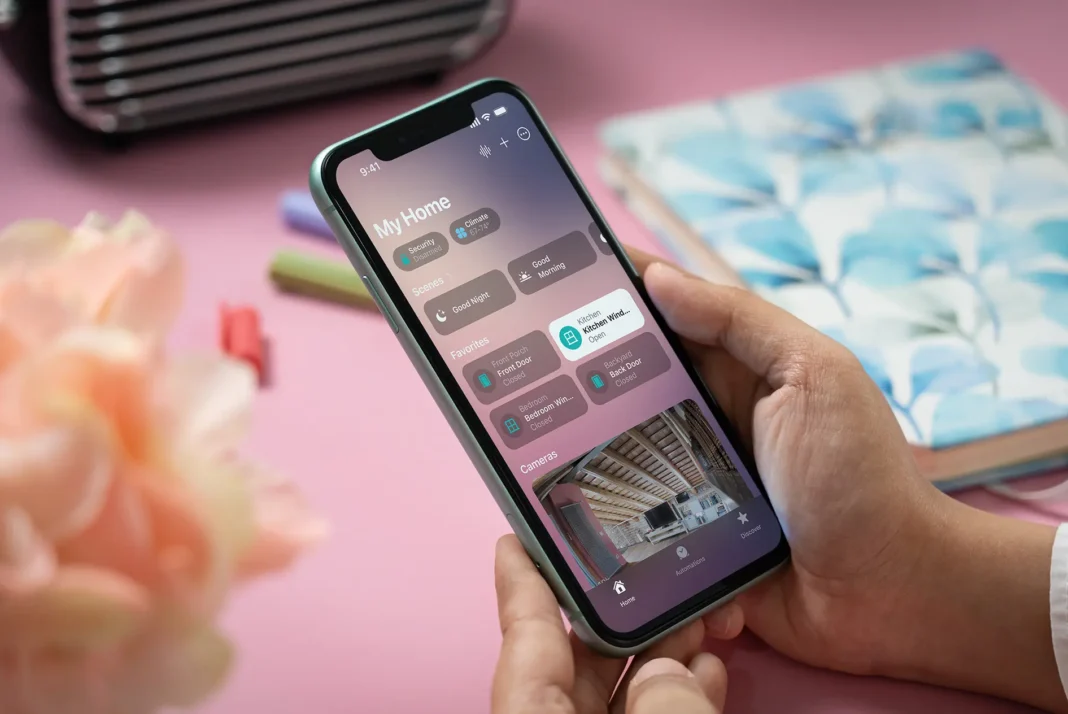

Apple home security devices may now launch in 2027 as the company shifts its smart home strategy toward a privacy-first camera paired with a new monitoring service. Earlier whispers pointed to a late 2026 debut for Apple home security devices, but fresh reporting from Bloomberg and multiple outlets now places the announcement and rollout in 2027 alongside other Home hardware.
What the reports say about Apple home security devices
Multiple sources now agree that Apple home security devices are in active development and tied to a subscription-style monitoring service. The centerpiece is described as a privacy-centric home security camera that uses on-device artificial intelligence to analyze the room instead of continuously storing raw video.
That approach is meant to reduce cloud exposure and align with Apple’s long-standing stance on processing data on the device whenever possible.
The hardware is expected to integrate tightly with the upcoming Apple home hub that will act as the control center for smart home accessories. Earlier leaks also mentioned a video doorbell and a robotic tabletop display, but those remain less certain than the camera and service pairing. What is clear from the latest pipeline reporting is that Apple home security devices are now grouped with 2027 launches rather than the end of 2026.
Why the timeline moved and what it means for buyers
The shift to 2027 likely reflects the complexity of building a monitored service that meets Apple standards for privacy, reliability, and global compliance.
A monitored service is not just a camera app; it involves alert routing, human review options, emergency dispatch partnerships, and clear liability frameworks. That is a bigger lift than shipping a standalone camera, and it explains why Apple home security devices are now presented as a system rather than a single gadget.
For people waiting to upgrade their setup, the practical takeaway is simple. If you want Apple home security devices with native HomeKit deep integration and on-device AI sensing, plan for 2027.
If you need protection today, you can still build a strong HomeKit-based system with third-party cameras and sensors while you wait for Apple home security devices to mature.
How Apple home security devices could work in your home
Based on the reporting, Apple home security devices will lean on ambient sensing and event-driven alerts instead of constant recording. Think of a camera that watches for motion patterns, occupancy changes, or unusual activity, then flags only those moments.
That design reduces storage needs and keeps most processing on the hub or the camera itself, which is exactly the kind of workflow Apple home security devices are expected to prioritize.
Integration with Siri and the Home app should make setup and daily use straightforward. You would likely configure alert sensitivity, choose which rooms matter most, and decide whether the monitoring service can contact you or a designated responder when an event is detected.
Because Apple Home security devices are being built as part of a broader Home overhaul, they should also play well with lights, locks, and automations that react when you leave or arrive.
Privacy and the monitoring service question
The most distinctive claim about Apple home security devices is the privacy-first camera that avoids storing continuous video. That does not mean no video ever, but it does suggest a model where the default is analysis on device and only specific clips or metadata leave the home when needed. This is a meaningful difference from many existing systems that upload everything to the cloud by default.
The monitoring service layer adds another dimension. If Apple home security devices include professional monitoring, you will want clear answers on data retention, who can access alerts, and whether video is ever sent to third parties during an incident. Apple has not published those details yet, so treat current descriptions as directionally accurate rather than final.
What to expect on price and availability
No official price has been announced for Apple home security devices or the accompanying service. Industry context suggests the camera will compete with premium indoor security cameras, while the service could be priced as an add-on subscription similar to other monitored home security offerings.
Because Apple home security devices are tied to a 2027 roadmap alongside other Home products, expect any pricing reveals to come close to launch rather than far in advance.
Availability may start in key markets and expand as the monitoring infrastructure scales. If you rely on Apple home security devices for peace of mind, check whether your region is supported at launch and whether the service includes local emergency dispatch or only app-based alerts.
How to prepare your home now for Apple home security devices
You do not need to wait passively to benefit from this direction. Start by auditing your network and placing your home hub or primary router where it can reliably reach entry points and key rooms.
Choose HomeKit-compatible cameras and sensors that already support local processing or encrypted storage so your workflow will feel familiar when Apple home security devices arrive.
Build automations that mirror the expected behavior. For example, trigger lights and locks when motion is detected after bedtime or send a high-priority notification when a door opens while you are away. That way, when Apple Home security devices launch, you are upgrading an existing routine instead of learning a new one from scratch.
Who should wait and who should buy now
Wait if you want tight integration with Siri, HomeKit, and a system designed around on-device intelligence. Apple home security devices are aimed at that exact buyer, and the 2027 timeline gives the team room to refine the monitoring service.
Buy now if you need immediate coverage or if you already have a trusted ecosystem that works well with your routines. You can still benefit from the same principles Apple home security devices emphasize by choosing cameras with strong local controls, clear privacy policies, and reliable alerting.
The bigger picture for Apple home security devices
This is not just a camera launch; it is Apple entering the monitored home security category with a privacy-led angle. That positions Apple home security devices against established players while differentiating on how data is handled and how alerts are generated.
If the execution matches the reporting, Apple home security devices could set a new baseline for what a home camera should do by default.
Until official details drop, treat current information as a well-sourced roadmap rather than a spec sheet. The consistent thread across reports is clear. Apple home security devices are real; they are moving to 2027, and they are being built as a system with a service at the core.