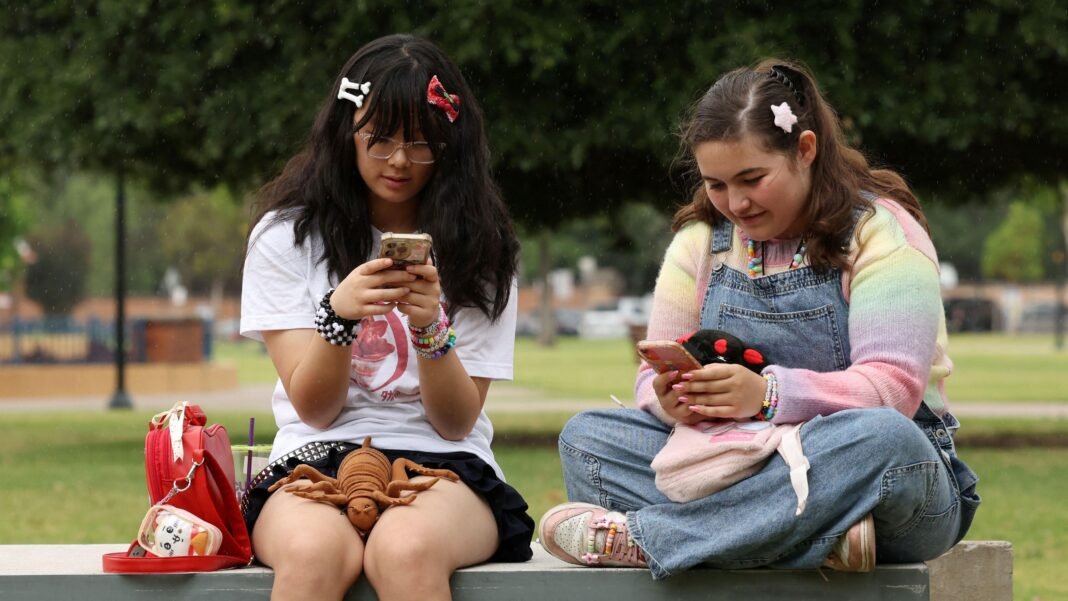

I have spent years reporting on youth culture, sitting in living rooms with worried parents and in coffee shops with teenagers who talk more openly to a stranger with a notebook than they do to their own families. If there is one theme that comes up in almost every conversation, it is social media and teens mental health.
Not bullying at school. Not grades. Not even friendships in the traditional sense. It is the phone. It is the endless scroll. It is the quiet, slow erosion that nobody clocks until a parent finds their child crying in a locked bathroom over a photo that got fewer likes than expected.
This is not another scare piece written by someone who has never opened TikTok. I use these platforms. I have interviewed psychologists, school counselors, and dozens of teenagers themselves. What follows is what I have actually learned, not what algorithms want you to believe.
The Comparison Trap Nobody Warned Us About
Every teenager I have spoken with admits to comparing their real life to someone else’s highlight reel. That is the core problem when we talk about social media and teens mental health. A fifteen-year-old scrolling through curated vacation photos, filtered skin, and staged happiness has no way of knowing that the picture took forty attempts. Their brain does not process it as fiction. It processes it as evidence that everyone else is living a better life.
Psychologists call this social comparison theory, and it is not new. What is new is the scale and speed. A teenager today can compare themselves to thousands of strangers before breakfast. That volume changes everything. The link between social media and teens mental health becomes obvious the moment you watch a teenager’s face change after checking their notifications first thing in the morning.
Anxiety, Sleep, and the Body Keeps Score
Sleep researchers have flagged this for years. Blue light from screens delays melatonin production, but the bigger issue is emotional arousal. A teenager who sees a mean comment right before bed does not simply close the laptop and drift off. Their nervous system stays activated for hours. Multiply that by every night of the week, and you start to understand why anxiety disorders among teenagers have climbed alongside smartphone adoption.
I am careful here because correlation is not proof of a single cause. But when counselors describe waiting rooms filled with teenagers reporting panic attacks tied directly to app notifications, it is hard to dismiss the pattern. Every serious conversation about social media and teens mental health eventually lands on sleep, because poor sleep worsens every other symptom, from irritability to depression to difficulty concentrating in school.
The Quiet Moral Drift
This is the part fewer people talk about, and it deserves more attention. Morality among teenagers is shaped by what they see rewarded. On social media, cruelty often gets more engagement than kindness. A savage comeback gets shared. A public callout gets views. A teenager watching this dynamic play out daily learns, whether consciously or not, that harshness earns attention and empathy earns silence.
I have watched decent kids turn cold online, not because they are bad people, but because the platform trained them to perform for an audience rather than act from conscience. Anonymity and distance remove the natural friction that stops most people from saying cruel things to someone’s face.
When you combine that with algorithms that reward outrage, you get a generation quietly rehearsing a colder version of themselves. This moral shift is just as important as the anxiety and depression statistics when we assess social media and teens mental health honestly.
Parasocial Relationships and the Loneliness Paradox
Here is something that surprised me during my reporting. Teenagers today often report feeling closer to influencers they have never met than to classmates they see every day. These parasocial bonds feel real because the influencer speaks directly into a camera, using intimate language, as if addressing one person. But the relationship only flows one way. No teenager has ever been comforted by an influencer during a real crisis.
This creates a strange loneliness paradox. Teenagers are more connected than any generation in history, yet studies consistently show rising loneliness. The conversation around social media and teens mental health has to include this contradiction. Connection without reciprocity is not real connection. It is a simulation that leaves the emotional need unmet while convincing the brain that socializing already happened.
What Actually Helps, Based on What I Have Seen Work
I am not going to suggest banning phones entirely, because that advice rarely survives contact with real family life. Instead, here is what parents, teachers, and even teenagers themselves have told me actually makes a difference.
Delayed access matters more than total restriction. Teenagers who get their first smartphone later, closer to sixteen rather than eleven or twelve, show noticeably better resilience against comparison anxiety. Their identity has more time to form offline before it gets tested online.
Phone-free bedrooms at night change sleep patterns almost immediately. Several counselors I interviewed said this single change produced the fastest visible improvement in mood among their teenage clients.
Naming the algorithm out loud helps teenagers develop critical distance.
When a parent or teacher explains that the app is engineered to keep them scrolling, and that their feelings of inadequacy are a business model, not a personal failing, something shifts. Teenagers are smart. They resent being manipulated once they see it clearly.
Modeling matters more than lecturing. Teenagers who watch their parents constantly checking phones at dinner internalize that behavior as normal, regardless of what rules exist on paper.
The Honest Bottom Line
I will not pretend social media is entirely evil. Teenagers have found community, support, and creative outlets online that did not exist for previous generations. But pretending the risks are exaggerated does a disservice to every parent trying to raise a grounded kid in this environment.
The research, the counselors, and the teenagers themselves all point to the same conclusion. Social media and teens mental health are tangled together in ways we are only beginning to understand, and the moral formation happening quietly in comment sections deserves just as much attention as the anxiety statistics making headlines.
If you are a parent reading this, you do not need to become a tech expert overnight. You need to stay curious, stay present, and keep the conversation about social media and teens mental health open in your own home, long before a crisis forces the issue.