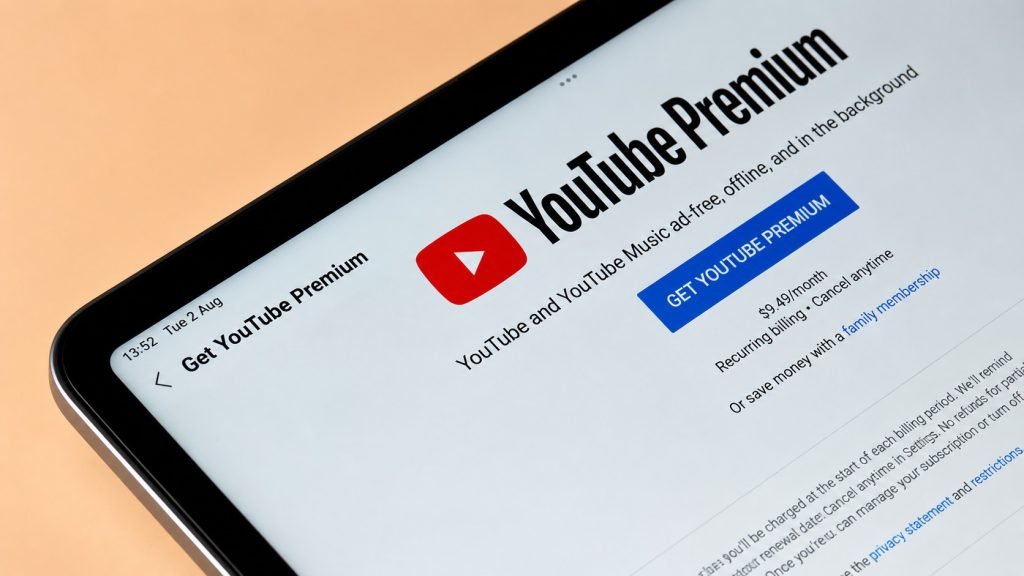

Paying for an ad-free streaming experience sounds simple. You subscribe, open a video, and expect the content to play without commercial interruptions. But YouTube Premium is now facing a second proposed class action lawsuit over what subscribers say is a gap between that promise and the experience they actually receive.
The latest case was filed in British Columbia, Canada, in August 2026. Three subscribers argue that creator-sponsored segments remain advertisements in practical terms, even though YouTube Premium removes the conventional ads inserted by YouTube.
The development follows a separate lawsuit filed in California in July 2026. That case similarly challenges the way YouTube Premium markets its ad-free experience and argues that sponsored content inside videos can undermine claims of uninterrupted viewing.
What The YouTube Premium Lawsuits Are About
At the center of both cases is a relatively straightforward question. What does “ad-free” actually mean when the advertisement is inserted directly into a creator’s video rather than delivered by YouTube’s advertising system?
YouTube Premium normally removes advertising that YouTube places around or within videos. That includes traditional pre-roll and mid-roll advertising that many free users encounter.
Creator sponsorships work differently. A YouTuber can stop a video and personally promote a VPN service, financial product, automobile, supplement, or another commercial product. Because the promotion is part of the uploaded video itself, YouTube Premium cannot simply remove it in the same way it removes platform-delivered advertisements.
That distinction has become the foundation of the legal complaints.
The Second Lawsuit Comes From Canada
The newest lawsuit involves three British Columbia subscribers named Thirumugham Palaniappan, Jason Kooner and Connor MacLeod. According to reporting on the case, they subscribed to YouTube Premium between 2021 and 2025 and argue that the service’s advertising claims are misleading when creator-sponsored promotions remain in videos.
The Canadian case is significant because it shows that the controversy is not limited to one group of American subscribers. The plaintiffs argue that consumers are paying for an experience marketed as ad-free, while still encountering commercial messages. Their complaint therefore focuses on the difference between removing YouTube-controlled advertising and removing advertising from the viewing experience altogether.
That distinction could become increasingly important as online creators depend more heavily on sponsorships.
The California Case Came First
In July, William Flemming and Devin Rose filed a proposed class action in California against Google and YouTube. The complaint argues that YouTube Premium is advertised as providing an ad-free and uninterrupted viewing experience even though creator-inserted promotions can still appear.
The California lawsuit specifically challenges marketing language surrounding the service. The plaintiffs argue that consumers can reasonably interpret terms such as ad-free and no interruptions as meaning that commercial interruptions will not appear while watching videos.
That is an important distinction in consumer protection law. The question is not necessarily whether YouTube technically explains the limitation somewhere in its terms. The bigger issue is whether an ordinary customer understands the headline promise before purchasing the subscription.
Why Creator Sponsorships Are Different
This controversy becomes easier to understand when looking at how YouTube advertising works. A traditional YouTube advertisement is controlled by the platform. YouTube decides where an advertisement appears and can remove it for YouTube Premium subscribers.
A creator sponsorship is embedded inside the video itself. The creator records the promotion as part of the content, uploads the completed video, and receives compensation from the sponsor.
For YouTube Premium, removing that segment would require identifying and skipping a specific portion of the video. That is fundamentally different from suppressing an advertising slot controlled by YouTube.
This technical distinction makes the issue complicated. From YouTube’s perspective, the service can reasonably be described as removing platform-served advertisements. From a subscriber’s perspective, however, hearing a two-minute commercial pitch during a video can still feel like watching an advertisement. That difference in expectations is exactly what makes these lawsuits interesting.
What YouTube Premium Actually Removes
The important thing for subscribers is understanding what YouTube Premium is designed to remove. The subscription eliminates advertisements served through YouTube’s advertising system. It does not necessarily transform every video into content without commercial material.
Creators can still promote products themselves. They can mention sponsors, display sponsored products, and include paid promotional segments within their videos.
For someone who subscribes primarily because they dislike conventional YouTube advertisements, YouTube Premium can still provide a substantially cleaner experience. But someone who interprets “ad-free” literally could reasonably be surprised when a creator pauses a video to deliver a sponsorship message.
Why The Wording Matters
The legal dispute may ultimately depend heavily on how YouTube Premium presents its promise to customers. Subscription services compete heavily on simple marketing statements. “Ad-free” is easier for consumers to understand than a technical explanation describing which advertisements are removed and which commercial messages remain.
That simplicity can become a problem when the underlying product is more complicated.
If a company advertises an experience as ad-free but then relies on fine print to explain that certain advertising remains, regulators and courts may have to decide whether the qualification is sufficiently clear.
The lawsuits do not establish that Google or YouTube has violated the law. These are allegations, and the plaintiffs still have to prove their claims. That distinction is important because a lawsuit itself is not evidence that a company has been found liable.
Could This Change YouTube Premium?
The immediate impact on YouTube Premium subscribers is likely to be limited because neither lawsuit automatically changes how the service operates.
However, the cases could pressure YouTube to make its advertising language more precise. One possible outcome could be clearer wording explaining that YouTube Premium removes YouTube-served advertisements but does not remove sponsorships or promotions recorded by creators.
That explanation would make the distinction much easier for customers to understand before subscribing. Another possibility is a broader debate about whether streaming companies should use the term “ad-free” when commercial messages remain inside user-generated content.
The Bigger Problem For Subscription Services
The dispute involving YouTube Premium reflects a much broader problem in the subscription economy. Consumers increasingly pay monthly fees to remove advertising. Streaming services, music platforms and other digital products have trained users to think of premium subscriptions as a way to escape commercial interruptions.
But advertising is changing.
Instead of appearing only as a traditional commercial break, advertising can now exist inside podcasts, videos, livestreams and social media posts. A creator can personally recommend a product without the platform inserting a conventional advertisement.
That makes the traditional definition of an advertisement increasingly difficult to apply.
What Subscribers Should Know
If you subscribe to YouTube Premium, the safest expectation is that YouTube’s own advertising will disappear, not that every commercial message inside every video will disappear. That means you may still encounter sponsorship reads, affiliate promotions, product placements, and creator advertisements.
For many users, this is not a major issue. The biggest benefit of YouTube Premium remains the removal of the repetitive advertisements that interrupt normal viewing.
But if your primary reason for subscribing is to eliminate every form of commercial messaging, you should understand this limitation before deciding whether the monthly fee is worthwhile.
What Happens Next
The two lawsuits could take considerable time to develop. Courts must determine whether the claims can proceed, whether the plaintiffs can represent a broader group of subscribers, and whether the alleged marketing practices violate applicable consumer protection laws.
The cases could also end without a major change to YouTube Premium. Still, the fact that similar complaints have now appeared in both the United States and Canada makes the issue worth watching.
For Google, the challenge is not simply technical. It is about managing customer expectations. For subscribers, the lesson is even simpler. “Ad-free” does not necessarily mean “free from every commercial message.”
As creator sponsorships become an increasingly important part of online video, YouTube Premium may have to explain that distinction more clearly.
Law Expert’s Opinion
The second lawsuit against YouTube Premium does not mean the service has been proven deceptive. At this stage, the allegations remain allegations.
But the lawsuits raise a legitimate question about what consumers should expect when they pay for an ad-free subscription.
YouTube Premium removes the advertisements controlled by YouTube, while creator sponsorships can remain embedded inside videos. That technical distinction may make sense from a platform perspective, but it can feel very different to a subscriber who paid specifically to avoid advertising.
The outcome of these cases could therefore have implications beyond YouTube Premium. If courts decide that consumers can interpret “ad-free” as freedom from embedded commercial promotions as well, other subscription platforms may eventually need to rethink how they describe their premium services.